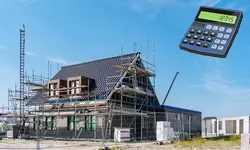
Building insurance in Switzerland: coverage, obligations and premiums

- Building insurance: a key part of your project
- What is building insurance?
- Is building insurance mandatory in Switzerland?
- What does building insurance cover?
- How much does building insurance cost in Switzerland?
- Practical case: what happens in the event of a claim?
- Building insurance and co-ownership (PPE): a special case
- How do you choose suitable building insurance?
Becoming a homeowner means protecting the building against risks that could damage it. Fire, storms, water damage or natural events: these losses can lead to particularly high repair costs. To deal with these situations, building insurance is the standard protection.
This insurance covers damage that directly affects the structure of a property: walls, roof, technical systems and built-in equipment. Unlike home contents insurance, which covers movable personal belongings, building insurance protects the construction itself.
In Switzerland, the way this insurance works is unusual: depending on the canton, it may be managed by a cantonal insurance institution (ECA) and be mandatory, or it may be taken out freely with a private insurer. This fundamental distinction is often overlooked by buyers, yet it has a direct impact on both cost and level of cover.
Before taking out a policy, it is helpful to understand what building insurance actually covers, when it is mandatory and how its price is determined. This insurance is a fixed cost that should be included in your budget for buying a house in Switzerland.
Building insurance: a key part of your real estate project
Building insurance is not just an administrative formality: it is essential protection for your assets and a core part of your purchase project. The building insurance premium represents an unavoidable annual expense that absolutely must be included in your financial planning.
On average, this insurance costs between 0.15% and 0.35% of the insured value of the building per year, which means several hundred to several thousand francs annually depending on the size and value of your property. This expense is added to your mortgage payments and co-ownership charges to form your total cost of ownership. To establish a realistic budget, it is therefore very important to request the exact premium amount before committing yourself. A mortgage broker can help you anticipate all of these costs and optimise your financing plan accordingly.
What is building insurance?
Building insurance is protection intended for property owners. It covers damage that may directly affect the structure of the building following events defined in the policy. Its purpose is to cover repair or reconstruction costs.
It only concerns fixed elements integrated into the building:
- The building structure: walls, roof, floors, façades
- Technical systems: heating, pipes, electricity
- Integrated fittings: certain kitchens or bathrooms
- Certain permanent outdoor installations: solar panels, fixed terraces, garden sheds
Movable property (furniture, electronic devices, clothing, personal belongings) is not covered. That falls under home contents insurance, which protects the contents of the home. These two policies complement each other for comprehensive asset protection.
Together, they provide more complete protection for your real estate assets. This is an essential point to check in your property buying advice: clearly distinguish what falls under building insurance and what requires home contents insurance. The owner must therefore manage the building insurance and the tenant the home contents insurance.
Is building insurance mandatory in Switzerland?
In Switzerland, the obligation to take out building insurance depends on the canton. Regulation is not uniform at federal level, which creates two distinct systems depending on where the property is located.
Cantons with a cantonal insurance institution (ECA)
In most Swiss cantons, there is a cantonal insurance institution (ECA) that holds the monopoly on building insurance for fire and natural hazards. Owners do not choose their insurer: affiliation is mandatory.
These ECAs are public-law entities. The premium is calculated on the basis of the official insured value of the building, set by the ECA itself according to standardised criteria. The level of cover is uniform for all owners in the canton.
Cantons with a free market
In six cantons — Geneva, Valais, Ticino, Appenzell Innerrhoden, Obwalden and Uri — there is no ECA. Owners are free to choose their insurer and compare offers. This freedom means greater responsibility when choosing cover: without adequate insurance, the owner bears the consequences of a major loss alone.
A major claim can lead to very high repair costs or even full rebuilding of the property. These unexpected expenses can jeopardise your ability to continue to finance a property over the long term, which is why this protection matters so much.
Building insurance and mortgage financing
Even in cantons where building insurance is not legally mandatory, it becomes de facto essential as soon as you want to finance a property with a mortgage.
Financial institutions systematically require proof of full building insurance before releasing funds. This requirement is intended to protect their collateral: if a major loss destroys the building, the insurance allows the property serving as security for the mortgage to be rebuilt. Without this protection, the lender would be left with a claim secured by a damaged or destroyed asset, which is an unacceptable risk.
When applying for a mortgage, you will therefore always need to provide proof of building insurance, even if your canton does not impose this obligation. To make this step easier and ensure you meet banking requirements, using a mortgage broker can greatly simplify the process, because they know exactly what each financial institution expects.
Summary table by canton (selection)
| Canton | System | Insurer | Specific feature |
| Vaud | Mandatory ECA | ECA Vaud | Fire + natural hazards cover included automatically |
| Bern | Mandatory ECA | GVB | Pricing based on official insured value |
| Geneva | Free market | Private insurer of your choice | Strong competition, comparing offers is essential |
| Valais | Mandatory ECA | ECA Valais | Avalanche cover included (specific risk) |
| Zurich | Mandatory ECA | GVZ | Standardised valuation process |
| Ticino | Free market | Private insurer of your choice | Close to Italian insurers, varied offers |
| Uri | Free market | Private insurer of your choice | Small market, few local providers |
Source: cantonal insurance associations. This table is indicative only — always check the rules currently in force in your canton.
What does building insurance cover?
Coverage varies depending on the system (ECA or private) and the selected options. Here are the most common protections.
Damage caused by fire
Fire is the fundamental risk covered by all building insurance policies. The cover includes damage caused by fire, smoke and explosions, as well as damage linked to emergency response (extinguishing water, partial demolition to gain access).
Natural events (natural forces)
Storms, hail, flooding, rising waters, avalanches, landslides and rockfalls: these risks are covered in most contracts, whether through the ECA or a private insurer. In Switzerland, around 15 to 25% of building claims are linked to natural hazards, depending on the year and weather events.
Water damage
Pipe leaks, burst pipes, overflow from sanitary installations: when this damage affects the structure of the building or fixed installations, building insurance may intervene. Be careful: water damage caused by infiltration through the façade or roof (poor maintenance) is often excluded.
Optional additional cover
Beyond basic coverage, some building insurance contracts offer additional protections. When your file is reviewed in order to obtain, for example, a fixed-rate mortgage, your bank may require specific guarantees depending on the type of building.
- Property owner’s liability: falling roof tile, snow slide, collapsed wall
- Glass breakage: windows, bay windows, conservatories
- Specific technical installations: solar panels, heat pump
- Earthquake: a rare option but relevant in certain areas
How much does building insurance cost in Switzerland?
The cost depends on several variables: type of property, surface area, location, reconstruction value, chosen deductible and selected cover. For a detached house, the annual premium can often fall within a range from a few hundred francs to more than one thousand francs per year. To include this expense precisely in your planning, our mortgage calculator allows you to simulate all your monthly costs.
Including insurance in your overall budget
Building insurance is one of the unavoidable fixed expenses for any owner. Before becoming a homeowner in Switzerland, it is essential to consult your mortgage broker to build a complete and realistic budget. Our brokers are available throughout Switzerland to support you: in Lausanne, Geneva, Fribourg or Neuchâtel. They analyse all your monthly expenses with you so that you can invest with confidence.

Practical case: what happens in the event of a claim?
Understanding how a claim declaration works helps you anticipate deadlines and procedures. Here is the standard process, applicable in most situations.
Step 1 – Report quickly
The claim must be reported within the time limits provided in the contract (generally 5 to 10 days after the damage is discovered). A delay may lead to a reduction or refusal of compensation. The declaration is made in writing, with photos and a description of the damage. Each insurer has its own process, which it explains on its website.
Step 2 – Expert assessment
The insurer or the ECA appoints an expert to assess the damage. In cantons with an ECA, this expert is often a cantonal official. In the private sector, it may be an independent expert appointed by the company. The assessment report determines the amount of compensation.
Step 3 – Compensation
Compensation is calculated on the basis of the reconstruction value, less the deductible and any depreciation for age (depending on the contract). In ECA systems, compensation aims to restore the property to new condition (new-for-old value). In some private contracts, age-related depreciation may be applied.
Building insurance and co-ownership (PPE): a special case
In co-ownership by floors (PPE), the issue of building insurance is more complex. The building as a whole is often covered by a collective policy taken out by the co-ownership association.
Each co-owner contributes to financing this collective insurance in proportion to their quota share (in thousandths). As the owner of a PPE unit, you generally do not need to take out an individual building insurance policy for the common structure.
On the other hand, certain elements specific to your unit (interior renovations, added equipment) may not be covered by the collective policy and may require additional cover. It is advisable to review the co-ownership regulations and the collective insurance policy before buying any PPE unit.
How do you choose suitable building insurance?
In a canton with an ECA
The insurer is imposed, but you can still act on supplementary cover. Check what the ECA covers and identify the gaps to be filled with a private insurer (owner’s liability, glass breakage, specific technical equipment).
In a free-market canton
Compare at least three offers. Focus on the precise list of covered (and excluded) risks, the amount and conditions of the deductible, the compensation method (new value vs. market value), and the reputation of the insurer’s claims service.
In all cases
This value must be estimated correctly in order to avoid underinsurance. This estimate is also used by banks to determine the value of your property in the context of a construction mortgage or a mortgage renewal.
- Have the reconstruction value of your property estimated correctly (not its market price)
- Declare all outbuildings and equipment (garage, solar panels, swimming pool)
- Re-read exclusions: damage linked to lack of maintenance is almost always excluded
- Reassess your cover after every major renovation
- In PPE, check the collective cover before taking out an individual policy
These options can help adapt protection to the characteristics of the building and the owner’s needs. For a personalised analysis of your situation, feel free to consult a mortgage broker in your region, who can guide you in choosing the insurance best suited to your project.