
The property sale deed (notarial deed) explained quickly and simply

- What is the property sale deed really used for in Switzerland?
- From the purchase offer to the draft deed
- What does a notarial property deed contain?
- Sale deed and mortgage loan: who does what?
- Preliminary sale agreement: why Switzerland works differently
- After signing: obligations, registration and handover
- FAQ about the property sale deed in Switzerland
- Prepare the sale deed and your mortgage at the same time
When buying property in Switzerland, the sale deed is the document that turns a commercial agreement into a legally binding commitment. For real estate, Swiss law requires a notarised public deed: the sale must therefore be authenticated by a public official competent under cantonal law, usually a notary. A common misunderstanding remains, however: signing the deed does not by itself transfer ownership. In an ordinary Swiss property purchase, the buyer becomes the legal owner when the acquisition is entered in the land register (see the example at the end of the article).
For a buyer financing the purchase with a mortgage, the sale deed is also the point where property law and mortgage finance meet. A timetable error, an insufficient mortgage certificate, a pension withdrawal arriving too late or an unmet bank condition can delay the transfer even though the price and the property were agreed several weeks earlier.
What is the property sale deed really used for in Switzerland?
A notarised contract, not a simple reservation confirmation
Article 216 of the Swiss Code of Obligations requires the sale of real estate to be executed as a public deed. The rule also applies to a promise to sell real estate when it creates an obligation to sell or purchase. A reservation form, written offer or exchange of emails should therefore not be confused with a genuine notarial deed.
The sale deed sets out, among other things, the parties’ identities, the property sold, the price, payment terms, rights and charges assumed, the possession date, the allocation of costs and the declarations required for the transfer. Depending on the transaction, it may also cover a long list of technical matters: easements, condominium ownership, leases, rights of first refusal, the condition of electrical installations, contaminated land or mortgage financing.
Signing and ownership: two different moments
In an ordinary property sale, the buyer becomes the owner when the acquisition is entered in the land register. Signing the sale deed creates the contractual obligations; registration effects the transfer of ownership.
Simple example: you sign a notarial deed on 3 November for a house costing CHF 850’000.–. The deed states that the transfer will be applied for once the price and bank guarantees are available. If the land-register entry is made on 10 November, that second date is, in principle, the date on which you become the owner. The handover of the keys may still be set for another date if the contract so provides.
This distinction explains why signing, transfer of ownership and taking possession must be kept separate.
From the purchase offer to the draft deed
Checks that should be completed before signing
The serious work starts before the appointment with the notary. As soon as seller and buyer agree on the property and price, the transaction must be documented. The professional responsible for authentication, usually the notary, checks or has the necessary documents completed: the parties’ identities and legal capacity, land-register extract, cadastral description, rights in rem, easements, pledges, public-law restrictions and any required authorisations.
For the buyer, this period should also be used to obtain a financing decision that can actually be implemented. An online simulation or indicative bank approval does not replace validation of the full file. The bank examines the property value, income, equity, affordability and, where relevant, the source of funds or use of the 2nd or 3rd pillar.
A good practice is to align the following three timetables:
- the seller’s timetable and the handover of the property;
- the notary’s and land register’s timetable;
- the bank’s timetable, the equity and pension assets.
This is precisely where a mortgage broker can be useful: they do not draft the sale deed, but they can follow the financing, compare lenders, anticipate their requirements and quickly provide the notary with the necessary contact details or confirmations.
The draft deed: the document to read before the appointment
The draft sale deed is normally sent before signing so that the parties can check its clauses. Do not limit your review to the price and address. A few lines about an easement, exclusion of warranty or pledge-secured debt may have a greater financial effect than a small difference in mortgage rate.
Check in particular that the draft correctly describes parking spaces, cellars, ancillary rooms, condominium ownership shares, appurtenances and adjoining plots. For a house, compare the land-register description with what you believe you are buying. For a condominium, the apartment is only part of the file: the regulations, exclusive-use rights, renovation fund and owners’ meeting decisions can materially change the assessment of the property.
What does a notarial property deed contain?
The common core throughout Switzerland
The form of the deed and some procedures are governed by cantonal law, but the core of the transaction is comparable throughout Switzerland. A prepared notarial deed identifies the parties and the property, states the price and payment arrangements, deals with the transfer of ownership and organises the rights or charges that are to remain, be removed or be created.
It generally includes:
- the references of the plot or condominium ownership share and the land-register extract;
- easements, rights of way, usufructs, rights of residence, rights of first refusal or other rights in rem;
- existing mortgage certificates to be cancelled, transferred, increased or reused;
- the price, any deposit, the balance and payment instructions;
- the transfer date, possession, benefits, risks and settlements between the parties;
- tax declarations and allocation of costs according to applicable law and the parties’ agreement;
- any prior conditions or authorisations.
A sale deed for a house may also contain clauses on the known condition of the building, defects, works promised before handover, installations included in the price or warranties. The wording varies considerably depending on whether the property is a new building sold by a developer, an older house or an income-producing property.
Technical points that are often underestimated
Easements: a right of way, building restriction or private pipe can limit use of the property. The existence of an easement in the land register does not always, by itself, show the practical consequence it will have for your project. Plans and supporting documents sometimes need to be read together with the wording.

Radon: Switzerland applies a reference level of 300 Bq/m³ for rooms where people spend time regularly. The FOPH publishes a probability map, but a measurement is needed to determine the situation of a particular building. A short measurement can be used as an estimate during a property transaction. The issue deserves particular attention for rooms in contact with the ground, converted basements and certain energy-renovation projects.
Contaminated sites: all 26 cantons maintain an online register. An entry does not automatically mean remediation is required, but it can affect the value, excavation costs and a bank’s analysis. This should therefore be checked before financing, not only when reading the sale deed.
Electrical installations and OIBT: when ownership changes, certain electrical installations subject to a 10- or 20-year periodic inspection must be checked if the last inspection took place more than five years ago. It must be determined who provides the safety report and, where necessary, who bears the cost of bringing the installation into compliance.
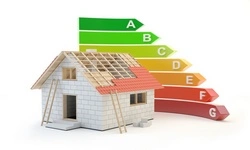
GEAK/CECB: the Cantonal Building Energy Certificate uses a harmonised methodology, but whether it is mandatory upon a transfer of ownership depends on the canton. It would therefore be incorrect to state that a certificate is systematically required throughout Switzerland. The file must be checked according to the canton in which the property is located.
Existing lease: buying a rented property does not automatically terminate the lease. Under the Swiss Code of Obligations, the tenancy transfers to the new owner. For an investor, the sale deed must therefore be read together with the leases, guarantees, service-charge statements and any ongoing disputes.
Condominium ownership: the condominium regulations, recent minutes, budget, approved works and renovation fund are not mere administrative details. A façade or roof project approved before your purchase can result in a significant future contribution. Where necessary, the deed should specify how certain charges are allocated between seller and buyer.
Property gains tax and statutory liens: tax owed by the seller and certain claims secured by a statutory lien may expose the property or complicate the transfer if they are not dealt with correctly. The exact mechanism depends on the applicable law. The notary may provide for retentions, guarantees, certificates or payment arrangements designed to secure the transaction.
Sale deed and mortgage loan: who does what?
The bank does not normally come and sign the sale with you
The mortgage lender finances the acquisition but is not a party to the sale deed between seller and buyer. The mortgage credit agreement, the creation or delivery of the mortgage certificate and the sale deed are legally distinct, even though they are closely coordinated.
Before releasing the funds, the bank wants the agreed security to be in place. This may require a new mortgage certificate, an increase to an existing certificate or transfer of a certificate already entered in the land register. The notary or land registry handles the required property-law operations; the bank supplies its instructions and disbursement conditions.
In practice, the lender may send the notary an irrevocable promise of payment or a conditional commitment to make the funds available. The notary then coordinates use of the money in accordance with the deed: payment to the seller, repayment of a previous mortgage creditor, costs or amounts retained depending on the transaction.
This is why it is useful for the mortgage broker to know the planned signing and transfer dates. Comparing several lenders is only useful if the selected offer can subsequently be implemented within the timetable of the deed.
 Visit our mortgage calculator to get a better idea of your property loan.
What the buyer should have secured before signing
Before signing the sale deed, the buyer should know at least the selected lender, the approved amount, the mortgage structure, the recognised equity and any conditions still to be satisfied. If part of the equity comes from the 2nd pillar, the pension fund’s administrative processing time must be built into the timetable.
A common mistake is to negotiate the rate for weeks without checking whether the lender can release the funds on the contractual date. Another is to forget the purchase costs, which are not always mortgage-financed and vary by canton.
A broker can also identify earlier a gap between the bank’s valuation and the agreed price. If the bank values at CHF 900’000.– a property purchased for CHF 1’000’000.–, it may calculate its financing on the lower value. The required equity can therefore increase, something that should be discovered before the notarial deed, not afterwards.
Preliminary sale agreement and promise to sell: why Switzerland works differently
A “preliminary property sale agreement” does not have the same role as it does in France, for example
In several countries, particularly France, a preliminary sale agreement commonly forms a separate stage concluded before the final public deed. A French-speaking buyer may therefore look for the same structure in Switzerland: first the preliminary property sale agreement, then the deed before the notary.
Transposing that structure is misleading when trying to understand a Swiss property sale. Swiss law does not organise property sales around a standard federal document called a “compromis”. As soon as an agreement genuinely constitutes a promise to sell real estate, the Swiss Code of Obligations in principle requires the public-deed form. Giving the document a different name does not avoid that requirement.
Before that stage, there may be a reservation, letter of intent, purchase offer or preparatory agreement. Its effect depends on its wording. Signing a document called a preliminary sale agreement without understanding its exact effect is therefore a poor approach. The right question is: “What obligations does this document create, under what conditions and in what form?”
The same caution applies to a promise to sell a house. It can be used to define the transaction before all conditions for the transfer have been met, but it is not merely an informal form when it legally obliges a party to sell or purchase real estate.
After signing: obligations, registration and handover
What the seller and buyer still have to perform
After the sale deed has been signed, the parties must perform what the deed provides. In particular, the buyer must provide or arrange payment of the price according to the agreed terms. The seller must enable transfer free of charges that are to be removed, hand over the property as agreed and provide any documents or certificates for which the seller is responsible.
The notary or competent authority then files the application with the land register once the conditions have been met. Depending on the clauses, the deed may require certain steps to be completed before this filing. A conditional sale is registered only once the condition has been fulfilled.
The question is sometimes put the wrong way round: it is obviously not the seller who “becomes the owner” after signing; in an ordinary acquisition, it is the buyer who acquires ownership through registration in the land register.
Mistakes that cost more than they appear to
- Signing the sale deed before having an actionable credit decision.
- Confusing an approval in principle with fully documented financing.
- Failing to check an easement because it has “always existed”.
- Ignoring the condominium regulations or works that have already been approved.
- Assuming the seller is liable for all defects when the deed contains an exclusion of warranty.
- Forgetting that a contaminated site can affect the property valuation and financing.
- Treating the OIBT inspection or the GEAK/CECB as if the same rule applied to every transaction.
- Relying on the term “compromis de vente” used abroad without checking the effect of the Swiss document.
- Setting a transfer date that is incompatible with the processing time for a pension withdrawal.
The cost of a mistake is not only legal. Poorly coordinated financing can lead to a postponement, a contractual penalty or the need to find funds urgently. The sale deed should therefore be treated as an operation to prepare, not as a twenty-minute administrative ceremony.
FAQ about the property sale deed in Switzerland
Can the deed be signed before the bank gives final approval?
It is legally possible in some situations, but financially risky if the commitment is not subject to an appropriate condition. Once the sale deed has been validly concluded, lack of financing does not automatically release the buyer. It is better to finalise the credit or have the conditions checked before signing.
Is a preliminary sale agreement mandatory in Switzerland?
No. There is no federal rule requiring a preliminary sale agreement as a mandatory step before the notarial deed. A preparatory agreement may exist, but its content and form determine its effect. A genuine promise to sell real estate is itself subject to the public-deed requirement.
When does the buyer actually become the owner?
In an ordinary acquisition, when the acquisition is entered in the land register. Signing the sale deed, payment, registration and handover of the keys are connected but legally distinct steps.
Is the mortgage included in the same deed?
Not necessarily. The financing, mortgage certificate and sale deed are separate transactions that may be coordinated in the same file and sometimes at the same meeting. The bank sets its disbursement conditions; the notary or land registry performs the required property-law operations.
Who pays the deed and land-register costs?
The answer depends on the canton, the type of cost and the agreement between the parties. Transfer taxes, land-register fees, notarial fees or charges for authentication, and the cost of establishing real-estate security are not uniform throughout Switzerland. Ask for a statement adapted to the canton and the property price.
Prepare the sale deed and your mortgage at the same time
The best time to prepare financing for the sale deed is not the day before signing. As soon as the price becomes concrete, you need to check your affordability, the likely bank valuation, available equity, any pension withdrawals and the seller’s timetable.
A professional mortgage broker can approach several lenders, compare their criteria and help you choose a financing structure consistent with the acquisition. The objective is not to replace the notary: the notary secures the legal transaction, while the broker works on the feasibility and terms of the mortgage credit. The two functions complement one another.
Submit a request now to receive mortgage proposals that can help you purchase the property you want.
Before you commit through a promise to sell, a preliminary property sale agreement or a sale deed, have your affordability and the actual availability of funds checked. Comparing mortgage offers early enough gives you more room to discuss with banks, correct an incomplete file and avoid having a deadline make the decision for you.
Are you preparing to buy a home or other property in Switzerland? An assessment of your affordability and a discussion with a mortgage financing specialist in your region can quickly determine whether the target price, your equity and the timetable for the notarial deed are compatible. Make contact before signing so that the financing is ready when the notary needs it.
Example of signing the deed and transferring ownership
When you sign the sale deed, the seller and buyer are legally bound by the contract. However, for an ordinary property sale in Switzerland, the buyer becomes the legal owner when the acquisition is entered in the land register.
Concrete example: you sign the notarial deed on 10 October. The notary then waits for certain conditions to be fulfilled — for example, payment of the funds by the bank, removal of a previous mortgage belonging to the seller or an authorisation. The application is then processed by the land registry and the entry is made on 15 October. In this case:
- 10 October: you are bound by the sale deed;
- 15 October: you become the legal owner;
- the handover of the keys is set out in the deed; it may be fixed for 10 October, for the land-register date — 15 October in this example — or for another time.
Disclaimer: this guide provides general information on property sales and mortgage financing in Switzerland. Formal requirements, fees, taxes, energy obligations and procedures vary according to the canton and the property. It does not replace individual legal or tax advice, nor checks carried out by the notary, land registry, cantonal authority or lender.
Official and technical sources consulted
– Swiss Confederation, Code of Obligations, in particular Art. 216 et seq.
– Federal Inspectorate for Heavy Current Installations (ESTI), information on periodic inspections when ownership changes
– Federal Office of Public Health (FOPH), radon in Switzerland, reference level and measurements during a property transaction