Energy renovation: benefits, grants, tax deductions and additional costs
- Standard renovation or energy renovation : where is the real difference?
- Grants for energy renovation: Buildings Programme
- Tax deductions : an often underestimated lever
- Comparison: standard renovation vs energy renovation
- Duration of the work : energy renovation vs standard
- The mortgage: an essential lever for your energy renovation
- Cantonal benchmarks : what changes depending on where you live
- Common mistakes to avoid and practical advice
- A 5-step action plan to start your energy renovation
Swiss buildings consume nearly 40% of the country’s energy and generate about one third of Switzerland’s CO₂ emissions. To address this issue, the Confederation and the cantons have created one of Europe’s most generous financial support systems. Yet many homeowners still hesitate : should they renovate in the traditional way or choose a more ambitious energy renovation? This guide gives you concrete elements to decide — costs, grants, taxation and mortgage financing — without detours.
Standard renovation or energy renovation : where is the real difference?
What an “ordinary” renovation covers
A so-called standard renovation aims to preserve the property’s value : replacing an outdated kitchen, renovating a bathroom, repainting or installing a new floor covering. These works improve comfort and appearance, but they have no measurable impact on the building’s energy consumption. The envelope (walls, roof, glazing) and technical systems (heating, ventilation) remain unchanged.
For tax purposes, these expenses are deductible as maintenance costs, but only to the extent that they maintain — and do not increase — the property’s value. The boundary is assessed case by case by the cantonal tax administration.
What energy renovation covers
Energy renovation — or energy refurbishment — targets the items that are genuinely responsible for heat loss and heating costs :
- Thermal insulation of the façade, roof and floor (thermal renovation of the envelope)
- Window replacement with high-performance double or triple glazing
- Replacement of a fossil-fuel heating system (heating oil, gas) with a heat pump, a district heating connection or a wood-fired system
- Photovoltaic installation combined with heat production
- Dual-flow ventilation with heat recovery
A Minergie — Switzerland’s reference label for low-consumption buildings — requires an overall performance standard, which determines access to certain specific grants.
The question of initial extra cost : myth or reality?
The energy optimisation of an existing building does indeed cost more than an ordinary renovation. As an indication for a typical single-family home in Switzerland :
- Complete façade + roof + floor insulation : CHF 40’000.– to CHF 120’000.– depending on surface area and technique
- Replacement of an oil boiler with an air/water heat pump : CHF 18’000.– to CHF 35’000.–
- Window replacement (standard house) : CHF 25’000.– to CHF 60’000.–
These figures may be frightening — until the grants are deducted, the annual savings on energy bills and the tax deductions. The next section details what you can actually recover.
Grants for energy renovation in Switzerland: the “Buildings Programme”
A two-tier federal-cantonal system
The “Buildings Programme” is the central pillar of support for energy renovation in Switzerland. It is based on co-financing between the Confederation (funded by the CO₂ levy) and the cantons. Each canton has its own scale, but the structure is harmonised nationally : every application goes through the platform energie-foerderung.ch.
Important point : the work must not start before the application is registered online. Starting the work without having first submitted the file automatically results in the loss of the grant entitlement.
Main subsidised items and 2026 orders of magnitude
The amounts below are indicative values taken from the federal and cantonal scales in force for 2026. They vary by canton and may change during the year depending on the status of budget envelopes.
- Thermal insulation of the envelope (M-01) : up to CHF 50.– per m² of insulated surface (U-value below 0.20 W/m²K required for roof and façade)
- Replacement of a fossil-fuel boiler with a heat pump : CHF 3’000.– to CHF 7’000.– basic federal grant, often supplemented by the canton
- Connection to a district heating network : grants vary according to installed capacity
- Comprehensive renovation (several combined measures) : additional bonus of up to 20 to 30% of the base amount if several items are addressed simultaneously
Cantonal allocations in 2026 : envelopes that run out quickly
In 2026, some cantons have sharply increased their commitment. The canton of Geneva is allocating CHF 80’000’000.– to energy renovation, CHF 10’000’000.– more than in 2025. The canton of Vaud is mobilising CHF 74’000’000.–, up 22% from the previous year. These budgets operate on a first-come, first-served basis : the best-funded envelopes are often exhausted as early as the first quarter.
Possibility of combining measures over time
A staged approach is expressly provided for by the “Buildings Programme”. Insulating the roof in 2026 and replacing the boiler in 2027 may generate two separate grant applications, provided each stage has been planned with an approved expert. This step-by-step strategy is often recommended when the overall budget is limited, but it requires an overall vision from the outset to avoid technical incompatibilities between stages.
Tax deductions : an often underestimated lever
General principle
Energy optimisation investments not covered by public grants are deductible from taxable income, both for direct federal tax and for most cantonal and municipal taxes. This rule is based on the federal ordinance on property-related costs.
Specifically, the following are deductible : envelope insulation, window replacement, photovoltaic installation, heat pump, ventilation system with heat recovery, as well as energy analyses such as CECB (cantonal building energy certificate) or CECB+.
The three-year rule : a tax optimisation tool
For energy improvement investments, federal tax law allows expenses to be spread over three consecutive tax periods. The rule requires the maximum possible amount to be deducted each year before carrying forward the balance. This smoothing option can break tax progression over several years and prevent a large expense from being partly “lost” because it exceeds the year’s taxable income.
Example with figures : You invest CHF 80’000.– in fully insulating your house. After deducting the grants received (e.g. CHF 15’000.–), CHF 65’000.– remain deductible. Rather than declaring everything in 2026, you can spread it out : CHF 30’000.– in 2026, CHF 20’000.– in 2027, CHF 15’000.– in 2028. The actual tax saving depends on your cantonal marginal tax rate, but may represent between CHF 15’000.– and CHF 25’000.– over the whole period, depending on the canton.
The 2026–2028 tax window : act before the reform
On 28 September 2025, the Swiss population approved, by 57.7%, the abolition of rental value, with entry into force set for 1 January 2029 (Federal Council decision of 1 April 2026). Until that date, the current system remains fully applicable : deductible mortgage interest, deductions for maintenance work and, above all, deductions for energy renovation remain fully available.
From 2029, these deductions will disappear at federal level for main residences. The cantons will have the option — but not the obligation — to maintain their own deductions for energy-related work. This uncertainty creates a significant tax opportunity window between 2026 and 2028. Homeowners who carry out their works within this period can still fully benefit from the current tax advantage, including the three-year spreading rule.

Note : all French-speaking cantons rejected this reform in the vote (Geneva : 66.1% no). Discussions are under way in several cantons to maintain their own tax incentives after 2029. Consult your cantonal tax administration to find out your canton’s position.
Numerical comparison : standard renovation vs energy renovation
The following two tables illustrate the financial structure of a property purchased for CHF 800’000.– with a first-rank mortgage at 60% over 10 years at 2% interest, with no amortisation. The purchase costs are estimated at 3% and maintenance costs at 1% of the property value. The renovation works are financed through an additional mortgage or an increase in the existing loan.
Indicative values. Variables depend on lenders, borrower profile and cantonal taxation.
Scenario 1 — Standard renovation (non-energy-related)
| Item | Amount | Comments |
|---|---|---|
| Property purchase price | CHF 800’000.– | Market value |
| Equity contribution (40%) | CHF 320’000.– | Including at least 10% outside the 2nd pillar |
| Mortgage amount (60%) | CHF 480’000.– | First-rank mortgage |
| Purchase costs (3%) | CHF 24’000.– | Transfer duties, notary, land register. Varies by canton (e.g. Vaud ~3.3%, GE ~3%) |
| Standard renovation works | CHF 40’000.– | Kitchen, bathroom, painting. Financed from equity or an additional mortgage |
| Annual debt interest | CHF 9’600.– | 2% × CHF 480’000.–. Deductible from taxable income until 2028 |
| Annual maintenance costs (1%) | CHF 8’000.– | Swiss average: 0.8% to 1.2% depending on age and condition. Deductible (lump sum or actual costs) |
| Annual energy savings | CHF 0.– | No energy efficiency measure |
| Grants received | CHF 0.– | Not eligible for the Buildings Programme |
| Estimated annual net cost | CHF 17’600.– | Interest + maintenance, excluding amortisation |
Possible annual tax deduction : mortgage interest (CHF 9’600.–) and actual or lump-sum maintenance costs (up to 20% of rental value depending on the canton) are deductible until 2028. Standard renovation works are deductible only if they maintain the property’s value — something the tax administration assesses case by case.
Scenario 2 — Energy renovation (complete refurbishment)
| Item | Amount | Comments |
|---|---|---|
| Property purchase price | CHF 800’000.– | Market value |
| Equity contribution (40%) | CHF 320’000.– | Including at least 10% outside the 2nd pillar |
| Mortgage amount (60%) | CHF 480’000.– | On the property value before works |
| Purchase costs (3%) | CHF 24’000.– | Same as scenario 1 |
| Energy renovation works | CHF 120’000.– | Façade + roof insulation, heat pump, window replacement. Financed via a mortgage increase or additional loan |
| Buildings Programme grants (estimate) | – CHF 28’000.– | Varies by canton and measures. Example : insulation of 200 m² at CHF 50/m² = CHF 10’000.– + heat pump grant CHF 6’000.– + additional cantonal grants |
| Net cost of works after grants | CHF 92’000.– | Amount actually financed |
| New mortgage base (property + net works) | CHF 572’000.– | The renovated property’s value increases, often allowing the works to be financed within the LTV ratio |
| Annual debt interest | CHF 11’440.– | 2% × CHF 572’000.–. Deductible until 2028 |
| Annual maintenance costs (1%) | CHF 8’000.– | The maintenance rate remains similar in the short term. From year 5–10 onwards, recent energy-efficient buildings show a 15–25% reduction in system maintenance costs (source : SIA sector data) |
| Annual energy savings (estimate) | – CHF 3’500.– | 40 to 60% reduction in the energy bill for an oil-heated building converted to a heat pump with complete insulation. Conservative estimate |
| Tax deduction on energy works (over 3 years) | – CHF 5’000.– /year | Estimated annual tax saving on CHF 92’000.– spread over 3 years (average marginal rate 25%) |
| Estimated annual net cost | CHF 10’940.– | Interest + maintenance – energy savings – tax saving |
Possible annual tax deduction : the CHF 92’000.– of net works (excluding grants) are deductible from taxable income over three tax periods. At a marginal rate of 25%, this represents a total tax saving of around CHF 23’000.– over three years — a direct return on investment that ordinary renovation cannot offer.
Over ten years, the gap between the two scenarios is even more marked. The renovated building generates cumulative energy savings of around CHF 35’000.–, benefits from lower maintenance costs and has a 5 to 15% higher fair market value on the Swiss property market according to sector studies.
 Try our mortgage calculator to simulate your home loan as part of your energy renovation project.
Duration of the work : energy renovation vs standard
A longer but more predictable project
A cosmetic renovation (kitchen, bathroom, coverings) generally takes 2 to 6 weeks depending on scope. A complete energy refurbishment involves more trades (insulation, windows, heating, electricity, ventilation) and takes between 3 and 6 months for a single-family home. A staged renovation spread over two years reduces the impact on occupancy.
Coordination between contractors is more demanding : windows must be installed before façade insulation, and the hydraulic network adapted before the heat pump is installed. A sequencing error can lead to costly rework. This is one reason why project owners benefit from appointing a CECB expert or specialist architect before hiring companies.
Maintenance : the discreet advantage of modern energy systems
Contrary to common belief, a properly sized heat pump has fewer wear parts than an oil boiler (no burner, no tank, no chimney-sweeping contract). Annual maintenance contracts for an air/water heat pump range from CHF 200.– to CHF 600.–, compared with CHF 400.– to CHF 900.– for oil boiler maintenance including cleaning and emissions checks.
High-performance insulation also reduces thermal cycles in the structure, which decreases wear on joints, frames and finishes. Over 15 to 20 years, owners of renovated buildings observe a notable reduction in unplanned one-off interventions.
The mortgage: an essential lever for your energy renovation
Financing the works within the mortgage framework
A large-scale energy renovation is not always financed from equity. In the vast majority of cases in Switzerland, homeowners increase their existing mortgage or take out an additional mortgage (mortgage advance, refinancing, construction loan). The condition : the property’s value after the works must justify the new borrowed amount.
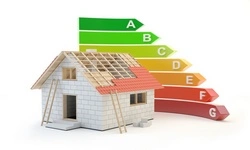
This is precisely where energy renovation offers a tangible advantage : valuers at financial institutions increasingly value more favourably properties certified Minergie or with documented energy refurbishment. A building that moves from energy class G to C sees its collateral value — and therefore borrowing potential — increase measurably.
Submit your application now to receive financing proposals adapted to this specific energy market.
Green offers : preferential-rate mortgages for renovated properties
Several banks and Raiffeisen branches offer “green” or “sustainable” mortgages with slightly advantageous terms for properties meeting a certified energy standard. These offers should not be taken as a rate promise, but they are an additional argument to use when negotiating with your bank.
Conditions vary depending on the institution, the borrower’s profile and the nature of the works. This is why comparing lenders — ideally through an independent mortgage broker — enables you to obtain a quick comparative view of market offers.
Why a mortgage broker makes the difference
When you combine a property purchase with an energy renovation programme, the financing structure becomes more complex : main mortgage, financing of the works, taking future grants into account, three-year tax planning. A professional mortgage broker knows each lender’s approval criteria, negotiates simultaneously with several institutions and presents your file in the strongest possible way.
In practice, the time saving is considerable : a direct process with a single bank can take 4 to 8 weeks, compared with 7 to 14 days to obtain several comparable offers through a broker. The financial gain is often measurable too : a few hundredths of an interest point on a CHF 500’000.– mortgage represent thousands of francs over the contract term.
Next step : Are you considering buying a property to renovate or refinancing your mortgage to finance an energy renovation ? Request an assessment of your borrowing capacity or arrange an appointment with a mortgage broker. The meeting is without obligation and will allow you to know exactly within which scope you can act.
Cantonal benchmarks : what changes depending on where you live
The “Buildings Programme” sets a common federal base, but each canton freely determines the additional amounts, eligibility conditions and possible legal obligations applicable in its territory. The gap between the most generous and the most restrained cantons can easily reach a factor of 2 to 3 for certain measures. Here is an overview of the main specific features to know.
Geneva and Vaud : among the highest envelopes in Switzerland
The canton of Geneva is allocating CHF 80’000’000.– in 2026 to energy renovation, co-financed by the canton, Services industriels de Genève (SIG) and the Confederation — CHF 10’000’000.– more than in 2025. For envelope insulation, Geneva is among the most generous cantons with up to CHF 140.– per m², nearly three times the basic federal rate. The canton is also subject to legal energy performance obligations for certain buildings, making energy renovation not only desirable but sometimes legally required within a set deadline.
The canton of Vaud is mobilising CHF 74’000’000.– (including CHF 40’000’000.– from the Confederation), up 22% from 2025. The 2026 scales have been slightly adjusted for individual insulation measures, but grants for comprehensive renovations remain attractive.
Zurich : technical rigour and support for the Minergie standard
The canton of Zurich updates its support programme every year. It supports energy optimisation of different building components as well as comprehensive renovations reaching the Minergie standard. Current measures include : replacing oil, gas or electric boilers with a heat pump or connection to a heating network, CECB+ analysis, and advice under SwissEnergy’s “renewable heating” campaign. Zurich also has a cantonal information portal covering all municipalities to facilitate location-based searches.
Bern : grants conditional on CECB class improvement
The canton of Bern stands out for a performance-based approach : grants are awarded only if the building gains one to two CECB classes after renovation. This mechanism encourages coherent works rather than ineffective one-off interventions. Since 1 January 2026, the canton has also applied a solar obligation for certain new constructions, extensions and major roof renovations. Aid covers thermal insulation, replacement of fossil systems and solar energy storage — a new feature reflecting the desire to go beyond photovoltaic production alone.
Basel-Stadt : one of the highest scales for heat pumps
Basel-Stadt is regularly among the most generous cantons for renewable heating systems. For an air/water heat pump replacing fossil heating, combined grants (federal + cantonal) can reach CHF 14’000.– depending on installed capacity. This generosity is partly explained by the density of the built environment and regulatory pressure on emissions in urban areas.
Valais, Uri, Glarus : among the most competitive grants per m²
Several mountain cantons offset the additional construction costs linked to the Alpine context with particularly advantageous scales. Valais subsidises insulation up to CHF 70.– per m² and offers up to CHF 260.– per m² of energy reference area for comprehensive renovations reaching the Minergie-P standard — one of the highest rates in Switzerland. Uri and Glarus reach up to CHF 150.– and CHF 140.– per m² respectively for insulation.
Lucerne : well-supported solar thermal and district heating
The canton of Lucerne stands out for its grants for solar thermal collectors (up to CHF 1’000.– per installed kW) and strong support for connections to district heating networks. It is also among the cantons offering the best grants for comprehensive Minergie renovations.
Fribourg, Neuchâtel, Jura, Valais : active complementary schemes
Each of these cantons has a cantonal programme that supplements the federal base, with emphasis on envelope insulation and the transition to renewable heating. Fribourg slightly reduced its M-01 scale in 2025 as part of a budgetary offset, but maintains support for comprehensive renovations and wood-energy systems.
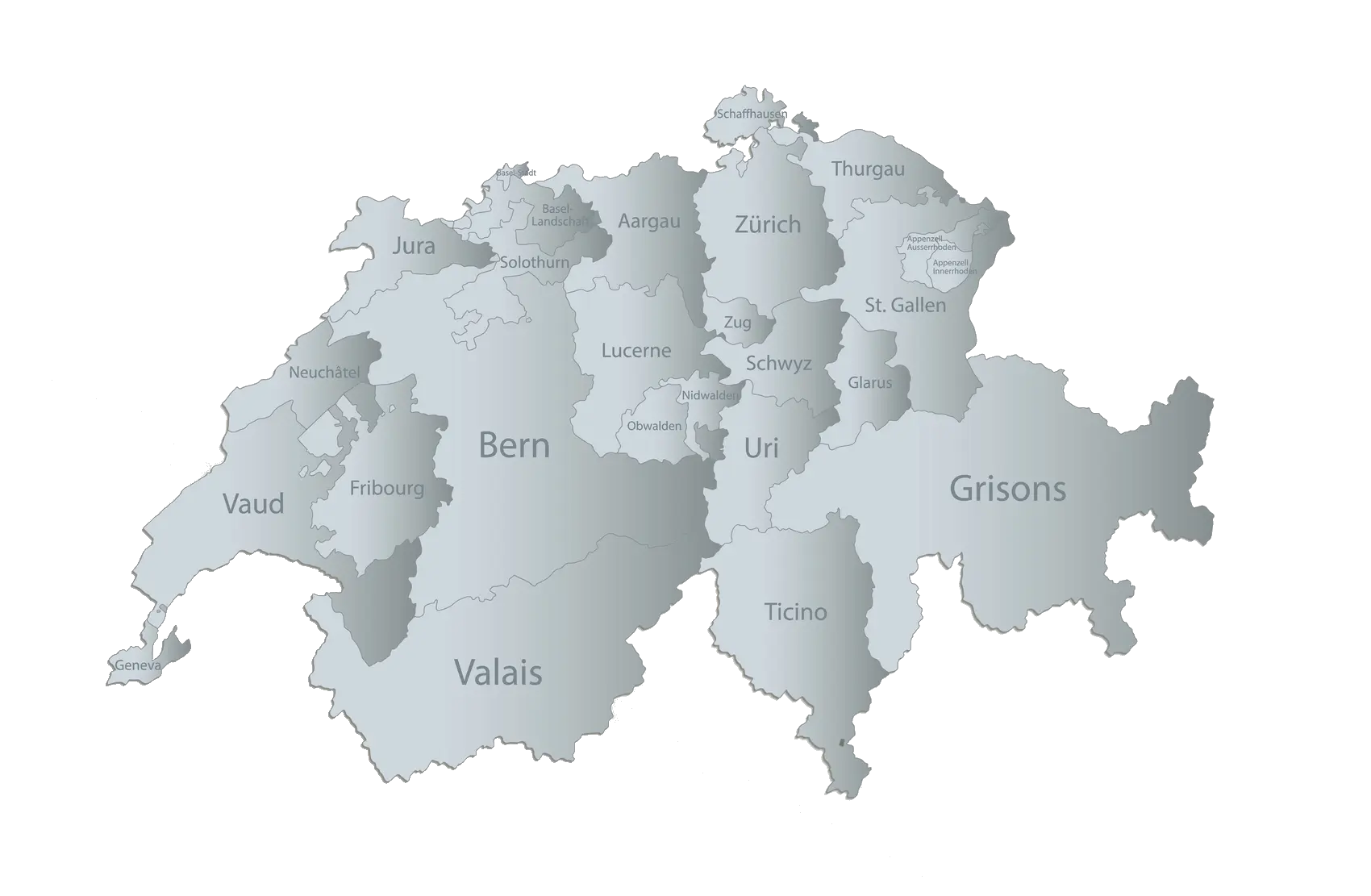
Choose your canton and contact us anywhere in Switzerland.
A point valid everywhere : municipalities as a third source of aid
Beyond federal and cantonal schemes, many Swiss municipalities provide their own complementary grants — sometimes significant and little known. These municipal aids are not listed on the national platform energie-foerderung.ch ; you should contact the municipal energy department directly or consult the municipality’s website before finalising your financing plan.
Transfer duties also vary considerably by canton : absent in several German-speaking cantons (ZH, BE, BS, BL, SH, AR, AI, GR, TG, NE), they can reach 3.3% in some French-speaking cantons. This item must be included in the calculation of your equity contribution.

Common mistakes to avoid and practical advice
Submitting the grant application too late — or after work has started
This is the most common and most costly mistake. The application must be registered on energie-foerderung.ch before the first shovel hits the ground. No derogation is possible : work started without prior application is excluded from aid, without exception.
Neglecting the diagnosis before works
Starting a thermal renovation without a prior audit (CECB or CECB+) is like prescribing treatment without a diagnosis. Thermal bridges, condensation areas and incompatibilities between systems are not always visible. An audit costs between CHF 1’500.– and CHF 5’000.– depending on building complexity, is partially subsidised in several cantons and often conditions access to comprehensive renovation grants.
Spreading tax expenses without a strategy
Deductions over three years offer a powerful tax lever — but only if they are planned. Too many owners declare all the works in the first year and lose a significant part of the tax advantage because expenses exceed their taxable income. Consult a tax specialist or your fiduciary before deciding how to spread them.
Waiting until 2029 to act
With the abolition of rental value on 1 January 2029, the window for combining tax deductions on energy works, mortgage interest and cantonal grants is gradually closing. Works started in 2026 and 2027 can still benefit from the three-year rule, pushing deductions through to 2028 — and preserving the tax advantage under the current system.
Underestimating resale value
In Switzerland, buyers and banks are paying increasing attention to a property’s energy class. A class G building represents a risk and a burden : the buyer mentally — and financially — factors in the cost of future works. A renovated and documented property is negotiated on equal or better terms, with a smoother mortgage financing process.
A 5-step action plan to start your energy renovation
- Have a CECB or CECB+ audit carried out to identify technical priorities and grant-eligible measures.
- Consult a mortgage broker in your region to assess your financing capacity and determine the optimal structure (main mortgage, mortgage advance, phased disbursements).
- Submit your grant application on energie-foerderung.ch before any work starts. Ideally at the beginning of the calendar year, before cantonal envelopes are exhausted.
- Plan the tax allocation with your fiduciary : decide whether the works are concentrated in one year or spread over two to three tax years.
- Appoint certified companies (RGE or cantonal equivalent) and keep all detailed invoices — tax administrations systematically reject poorly documented deductions.
Find us throughout Switzerland
Zoomez et cliquez sur le canton désiré.
Disclaimer : This article is provided for information purposes only and does not constitute personalised tax, legal or financial advice. The grant amounts, interest rates and tax rules mentioned are indicative values that may change. Exact conditions depend on the canton, the borrower’s profile and the lender. Consult an authorised mortgage broker, a tax adviser and the official websites of the cantons and the Confederation before making any investment or financing decision.
Main sources : Confederation/cantons “Buildings Programme”, Federal Tax Administration (FTA).